 By
By 
Remember the days when fixing your smile meant sitting through lengthy consultations, relying entirely on your dentist’s verbal description, and hoping the final result matched what you had imagined? Those days are firmly behind us. Today, artificial intelligence and Digital Smile Design are reshaping the way dentists plan, communicate, and deliver smile transformations, and the results are nothing short of remarkable.
If you have been considering improving your smile but felt unsure about committing to a treatment you could not fully visualise beforehand, this is the article for you.
What Is Digital Smile Design and Why Does It Matter?
Digital Smile Design, commonly referred to as DSD, is a planning protocol that uses digital tools, photography, videography, and now artificial intelligence to design a patient’s new smile before any treatment begins. Think of it as a blueprint for your face.
The process starts with capturing high-resolution photographs and videos of your face, lips, and teeth, both at rest and while smiling. These images are then mapped onto specialised software that analyses facial proportions, gum levels, tooth shape, and overall harmony. The result? A fully visualised preview of your potential smile, customised to your unique facial features.
This is not guesswork. It is precision planning backed by data.
How AI Takes It a Step Further
Artificial intelligence has elevated Digital Smile Design from a helpful tool to a genuinely transformative one. Here is what AI brings to the table:
Facial Analysis at Scale: AI algorithms can analyse dozens of facial parameters in seconds, identifying symmetry, midline alignment, and proportions that would take a human eye significantly longer to assess.
Predictive Modelling: AI can simulate how a smile will look after different types of treatments, whether veneers, composite bonding, orthodontics, or a combination, giving patients a clear, realistic preview.
Pattern Recognition: By drawing on thousands of dental cases, AI can recommend tooth shapes and sizes that are most likely to complement a specific facial structure.
Error Reduction: AI-assisted planning minimises human error in measurements and treatment sequencing, leading to more predictable outcomes.
How the Treatment Process Works Today
Modern smile transformations at a well-equipped smile makeover clinic in Lower Parel are a far cry from the hit-or-miss procedures of the past. Here is what a typical patient journey looks like now:
Step 1: Digital Consultation and Imaging
Your first visit involves detailed photography and facial scanning. Unlike traditional impressions using putty moulds, digital impressions using intraoral scanners are fast, comfortable, and highly accurate.
Step 2: AI-Assisted Smile Simulation
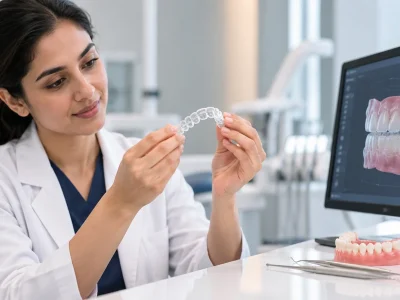
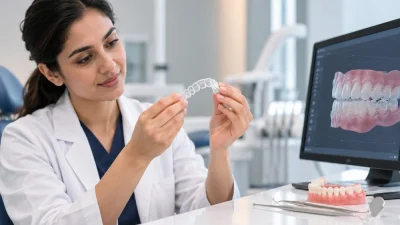
Using DSD software integrated with AI, your dentist creates a digital mock-up of your new smile. You can see exactly how your teeth will look after treatment, on your face, with your features. Changes can be made in real time based on your feedback.
Step 3: Trial Smile (Mock-Up)
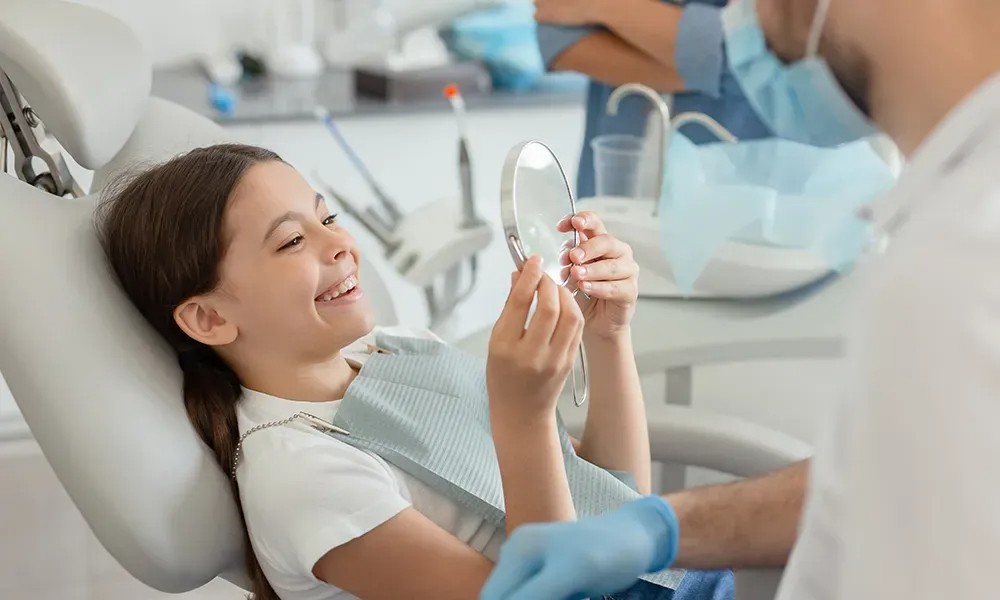
Many clinics now offer a physical trial smile, where a temporary version of the planned changes is placed on your teeth so you can experience the look and feel before committing to permanent treatment.
Step 4: Precision Treatment Execution
With the digital plan locked in, dental restorations (veneers, crowns, or composite) are fabricated using CAD/CAM technology to precise specifications. What used to take weeks of back-and-forth with a dental lab can now be completed with far greater accuracy and speed.
The Treatments That Benefit Most from Digital Planning
Digital Smile Design and AI are particularly impactful for the following procedures:
Porcelain Veneers
Veneers are wafer-thin shells placed over the front surface of teeth to correct shape, colour, or minor misalignment. With DSD, each veneer is designed to exact proportions that suit your face rather than a generic template.
Composite Bonding
A more affordable alternative to veneers, composite bonding benefits from digital planning because the layering and shaping can be mapped in advance, reducing chair time and improving consistency.
Full Mouth Rehabilitation
For patients needing significant restorative work across multiple teeth, AI-assisted planning ensures every element works in harmony, from bite alignment to aesthetics.
Orthodontic Integration
Digital smile design can also be combined with clear aligner therapy to plan the ideal tooth position before aesthetic work begins, ensuring the foundation is solid.
Why This Shift Matters for Patients
Beyond the technical advantages, the shift to AI and digital planning fundamentally changes the patient experience in three important ways.
Transparency: You are no longer asked to trust blindly. You see the plan, approve it, and only then does treatment begin.
Confidence: Knowing exactly what to expect reduces anxiety significantly, particularly for patients who have had negative dental experiences in the past.
Better Outcomes: When treatment is this precisely planned, the gap between expectation and reality narrows dramatically.
Finding the Right Clinic for Your Smile Transformation
Not every dental clinic is equipped to offer AI-integrated Digital Smile Design. It requires investment in technology, training, and a team that understands both the artistic and clinical dimensions of smile design.
If you are based in Mumbai, visiting a reputable dental clinic in Lower Parel like Iridia Dental Clinic gives you access to this level of care without having to travel across the city. Dr. Kulsum Husain combines modern technology with experienced dental professionals who treat every smile as a unique project, not a routine procedure.
Reach out to Iridia Dental today and take the first step toward a smile that truly reflects you.
Your Smile, Redesigned: What to Remember
The convergence of AI and Digital Smile Design has moved dentistry from an art guided by instinct to a science guided by data, without losing the human touch that great dental care requires.
Here is what you should take away from this:
- Digital Smile Design lets you see your results before treatment even begins, removing guesswork entirely.
- AI enhances accuracy in facial analysis, treatment planning, and restoration design.
- The patient experience is more transparent and collaborative than ever before.
- Technology does not replace your dentist, it gives them better tools to serve you.
- Choosing a technologically equipped clinic matters, because not all practices offer this level of planning.
- Mumbai patients have access to world-class smile design right here in the city, at clinics like Iridia Dental in Lower Parel.
Your smile is often the first thing people notice about you. With the tools available today, there is no reason to settle for anything less than the best version of it.
Frequently Asked Questions (FAQs)
Q1. What is Digital Smile Design and is it suitable for everyone?
Digital Smile Design is a planning process that uses digital imaging and software to design a customized smile before any treatment begins. It is suitable for anyone considering cosmetic or restorative dental work, including veneers, bonding, crowns, or a full smile makeover. Your dentist will assess your oral health to confirm suitability during consultation.
Q2. How accurate is the AI smile simulation? Will my final result look exactly like the preview?
AI-assisted simulations are highly accurate and designed to be as realistic as possible. While minor variations can occur due to natural differences in tissue response and healing, the final result closely mirrors the digital plan in most cases. The trial smile step further bridges any gap between the simulation and the actual outcome.
Q3. Is Digital Smile Design expensive? Does it add to the overall treatment cost?
The cost of Digital Smile Design is typically included as part of the overall treatment planning fee at modern clinics. While it may add a marginal cost upfront, it significantly reduces the risk of dissatisfaction, revisions, or costly corrections later. Think of it as an investment in getting it right the first time.
Q4. How long does a smile makeover take from consultation to completion?
The timeline varies depending on the treatments involved. A composite bonding makeover can sometimes be completed in a single visit, while a comprehensive veneer or rehabilitation case may take three to six weeks from planning to final placement. Your dentist will give you a specific timeline after the digital consultation.
Q5. How do I get started with a smile makeover at Iridia Dental in Lower Parel?
Getting started is simple. You can contact Iridia Dental directly to schedule a digital smile consultation. During your first visit, the team will capture the necessary images and begin the design process, so you can see your new smile before committing to any treatment.







Comments